Topository T-shirts Knowledge worth wearing
  1. Kronosaurus and Eromangasaurus Kronosaurus queenslandicus was a powerful, short-necked pliosaur; Eromangasaurus australis was a long-necked elasmosaur. Both inhabited Queensland's Early Cretaceous Eromanga Sea around 100 million years ago. This imagined encounter pairs prehistoric marine reptiles with a darkly humorous invitation to visit Queensland.
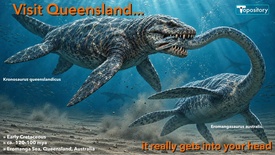
    Kronosaurus queenslandicus was a powerful, short-necked pliosaur; Eromangasaurus australis was a long-necked elasmosaur. Both inhabited Queensland's Early Cretaceous Eromanga Sea …
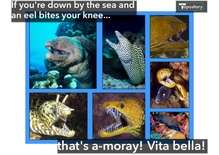
  2. Moray Eels Moray eels are reef-dwelling fishes with powerful jaws and a second set of pharyngeal jaws that pulls prey into the throat. Their sinuous bodies let them hunt from narrow crevices.

    Moray eels are reef-dwelling fishes with powerful jaws and a second set of pharyngeal jaws that pulls prey into the …

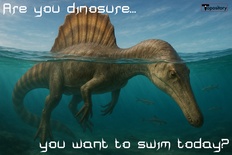
  3. Spinosaurus Spinosaurus was a sail-backed Cretaceous predator whose crocodile-like jaws and conical teeth were adapted for catching fish. It hunted around North African rivers and wetlands.

    Spinosaurus was a sail-backed Cretaceous predator whose crocodile-like jaws and conical teeth were adapted for catching fish. It hunted around …

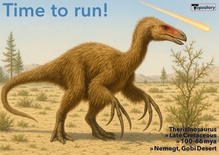
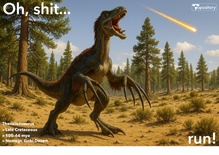
  4. Therizinosaurus 01 Therizinosaurus belonged to the theropods, the dinosaur group that includes birds and many meat-eaters. Evidence from its close relatives indicates that it was primarily herbivorous, illustrating how this lineage evolved very different feeding habits. It lived in Late Cretaceous Mongolia.

    Therizinosaurus belonged to the theropods, the dinosaur group that includes birds and many meat-eaters. Evidence from its close relatives indicates …

  5. Therizinosaurus 02 Therizinosaurus is famous for its greatly elongated hand claws, among the most extreme known in dinosaurs. Their function remains debated: researchers have explored possibilities including gathering vegetation and display. This unusual plant-eating dinosaur lived in Mongolia around 70 million years ago.

    Therizinosaurus is famous for its greatly elongated hand claws, among the most extreme known in dinosaurs. Their function remains debated: …

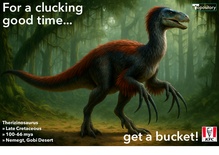
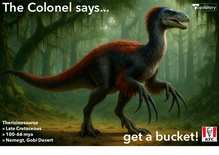
  6. Therizinosaurus 04 Therizinosaurus had an unusual body plan for a theropod, with a long neck, a bulky torso and massive clawed forelimbs. Much of its reconstructed anatomy comes from comparisons with better-known relatives such as Alxasaurus and Erlikosaurus. Its fossils come from Late Cretaceous Mongolia.

    Therizinosaurus had an unusual body plan for a theropod, with a long neck, a bulky torso and massive clawed forelimbs. …

  7. Therizinosaurus 05 Feathered reconstructions of Therizinosaurus draw on fossils of related therizinosaurs, including Beipiaosaurus, which preserve feather-like filaments. The extent and colour of Therizinosaurus's own covering remain uncertain because its fossil record is incomplete. It was a large, mainly plant-eating dinosaur of Late Cretaceous Mongolia.

    Feathered reconstructions of Therizinosaurus draw on fossils of related therizinosaurs, including Beipiaosaurus, which preserve feather-like filaments. The extent and colour …

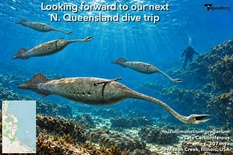
  8. Tully Monster Tullimonstrum gregarium (Tully monster),was a strange Late Carboniferous animal that lived about 307 million years ago. Fossils are known from Mazon Creek, Illinois, USA.It has nothing to do with North Queensland...

    Tullimonstrum gregarium (Tully monster),was a strange Late Carboniferous animal that lived about 307 million years ago. Fossils are known from …

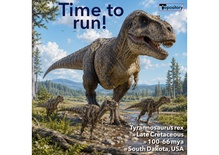
  9. Tyrannosaurus rex Tyrannosaurus rex was a giant Late Cretaceous predator from western North America. Its deep skull and banana-sized teeth delivered one of the most powerful bites known among land animals.

    Tyrannosaurus rex was a giant Late Cretaceous predator from western North America. Its deep skull and banana-sized teeth delivered one …

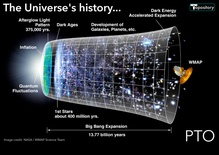
  10. Universe Front panel of a two-sided T-shirt. NASA/WMAP artwork illustrates the expanding Universe, from its hot early stages and cosmic microwave background to the formation of stars and galaxies and the later acceleration of expansion. It spans approximately 13.8 billion years of cosmic history.

    Front panel of a two-sided T-shirt. NASA/WMAP artwork illustrates the expanding Universe, from its hot early stages and cosmic microwave …

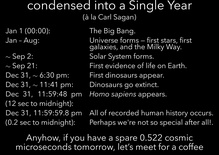
  11. Universe Back panel of the same T-shirt. The artist's interpretation of Carl Sagan's Cosmic Calendar compresses approximately 13.8 billion years into one calendar year. From the Big Bang to galaxies, Earth and biological evolution, it places humanity near midnight on December 31.

    Back panel of the same T-shirt. The artist's interpretation of Carl Sagan's Cosmic Calendar compresses approximately 13.8 billion years into …

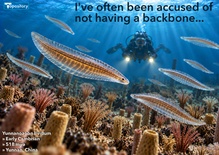
  12. Yunnanzoon Yunnanozoon was an enigmatic Early Cambrian animal from China. Its anatomy informs debate about the origins of deuterostomes—the branch of life that includes vertebrates and humans.

    Yunnanozoon was an enigmatic Early Cambrian animal from China. Its anatomy informs debate about the origins of deuterostomes—the branch of …